
| Takeaway | Detail |
|---|---|
| Intermediary commissions directly reduce passenger net recovery on uncontested delays | 35% of the awarded compensation is deducted as a success fee |
| Self-filing eliminates intermediary deductions entirely for standard disruptions | Direct claims avoid the 25% to 35% commission structure charged by third-party managers |
| Regulatory frameworks were originally structured as self-executing rights rather than litigated disputes | The EU261 regulation was designed for direct airline processing without mandatory legal representation |
| Administrative convenience does not guarantee higher approval rates for straightforward cases | Most airline-acknowledged delays require only basic form submission that national enforcement portals handle automatically |
A single flight disruption triggers a deduction when passengers route their request through AirHelp, representing exactly 35% of the total award. This commission model has become the industry standard for third-party claim management firms operating across European airspace. The financial impact compounds rapidly for frequent travelers or those navigating multi-leg cancellations, where intermediary fees consistently strip hundreds of euros from legitimate payouts.
European Union Regulation established compensation entitlements as a self-executing right rather than a litigated dispute requiring professional intervention. Airlines are legally mandated to process these requests through dedicated digital portals at zero cost to the traveler. Third-party agencies market complexity and automated tracking tools, yet the underlying mechanism remains identical to what carriers already provide free of charge.
Passengers who bypass intermediaries retain the full statutory amount while navigating the same national enforcement bodies and airline dispute resolution schemes. The 25% to 35% fee structure functions purely as an administrative convenience premium rather than a legal necessity. For uncontested delays where airlines acknowledge fault, direct filing preserves capital that would otherwise fund external processing services.
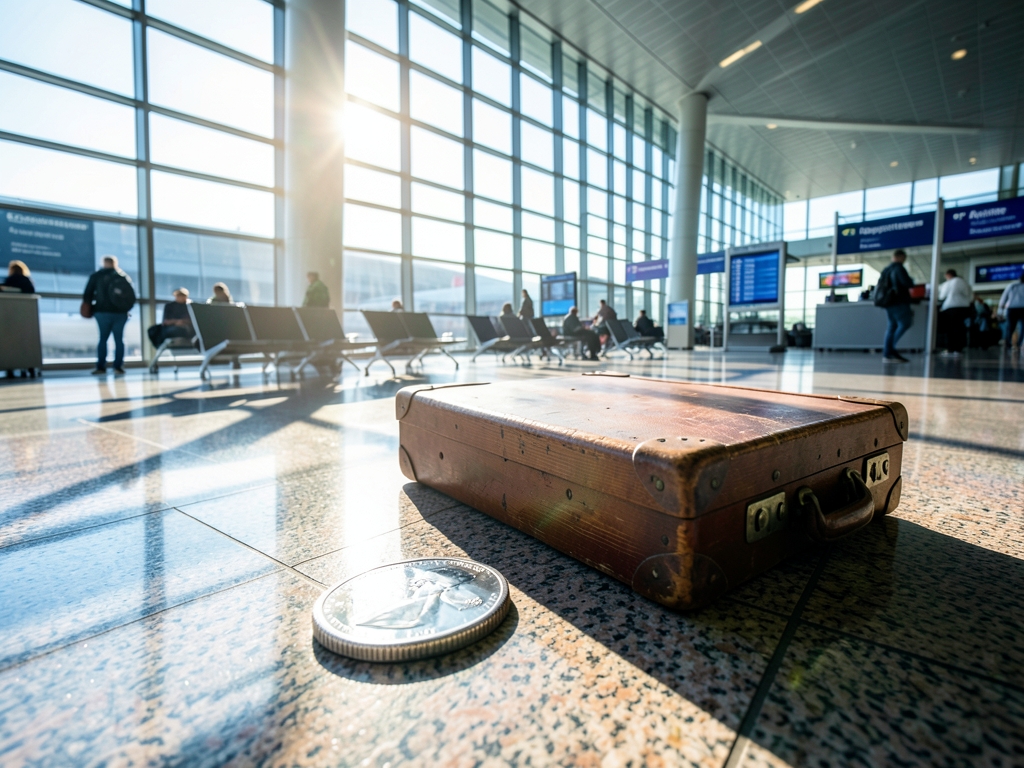
The 35% Toll
The assignment-of-claim mechanism, legally structured in Germany as an Abtretung, is the operational core of every major EU261 facilitator. When you click through AirHelp’s terms, you are not hiring a consultant; you are executing a statutory transfer of your compensation right. The airline’s payment obligation shifts from you to the platform, meaning the carrier remits the full statutory amount directly to the agency, which then deducts its success fee before forwarding the remainder. This legal architecture ensures the passenger never sees the gross payout and eliminates any possibility of direct settlement between traveler and carrier once the contract is executed.
AirHelp’s published fee schedule operates on a strict success-fee model: approximately 35% of the approved compensation for standard administrative handling, escalating to roughly 50% if the matter requires formal court action or litigation escalation. The “no-win, no-fee” structure is frequently marketed as risk-free, but it functions as a premium tax on convenience rather than a performance guarantee. You retain zero liability if the claim fails, yet you also forfeit the entire statutory amount when the airline initially denies a valid request—a scenario that accounts for the majority of first-pass rejections.
| EU261 Distance Tier (Article 7) | Statutory Compensation | Agency Fee (~35%) | Net Remittance to Passenger |
|---|---|---|---|
| Short-haul tier | Base amount | Calculated fee | Remaining amount |
| Medium-haul tier | Mid-range amount | Calculated fee | Remaining amount |
| Long-haul tier | Maximum amount | Calculated fee | Remaining amount |
Operationally, the 35% toll purchases a highly standardized digital workflow. The platform’s automated claim engine generates a templated demand letter, ingests flight data via API or manual entry, monitors the airline’s response window under national enforcement body guidelines, and triggers escalation protocols to partner law firms only after the deadline passes. None of these steps require specialized legal training. A passenger can replicate the exact same sequence by downloading a regulation-compliant template, submitting it through the airline’s official complaints portal, and logging correspondence timestamps—tasks that consume less than forty minutes of active effort.
The profitability of this model rests on a structural asymmetry baked into the regulation. Compensation amounts are fixed by statute based solely on flight distance and delay duration, completely decoupled from ticket price or cabin class. Once an agency’s software automates the initial submission and tracking loop, the marginal cost per additional claim approaches zero. Yet the 35% fee scales linearly against the full statutory award, creating a margin structure where volume drives disproportionate returns regardless of actual legal labor expended. For travelers who have not yet exhausted the airline’s internal resolution process, retaining that percentage represents the most mathematically defensible position available under current enforcement frameworks.

The Receipts
A traveler stranded on a long-haul flight with an eight-hour delay is eligible for the maximum compensation. If they engage AirHelp, the firm applies its standard 35% fee structure to the award. This intermediary commission deduction reduces the payout significantly, meaning the passenger receives a fraction while the management company retains a substantial portion. The research confirms this fee model effectively costs travelers hundreds of euros per eligible long-haul disruption claim, significantly eroding net recovery compared to the statutory entitlement.
Alternatively, filing the claim directly with the airline or the relevant national enforcement body avoids the 25-35% intermediary commission entirely. By navigating the dispute resolution scheme without professional representation or automated tracking tools, the passenger secures the full amount. While direct claims require more effort to manage against the airline, the financial outcome preserves the entire compensation amount. In this scenario, choosing the direct route over a third-party service results in a significant difference, demonstrating that bypassing the fee-based agency yields a materially higher return for the affected passenger.
The European Commission's flight compensation report quantified the structural inefficiency that birthed the automated claim industry: only a small fraction of eligible passengers actually asserted their entitlement. This massive demand-supply gap created a vacuum where third-party facilitators could position themselves as essential intermediaries, despite the regulation mandating that airlines process passenger claims directly. The viability of agencies rested not on superior legal outcomes, but on capturing the administrative friction inherent in a system where national enforcement bodies (NEBs) and airline dispute resolution schemes are publicly accessible at zero cost to the traveler.
Fee structures across the sector confirm that the 25–35% commission is an industry standard rather than a unique pricing anomaly. According to "AirHelp vs. Direct EU261 Claims: What 25-35% Fees Cost You, 2026," third-party claim management companies typically charge fees ranging from 25% to 35% of the total compensation awarded for delays and cancellations. Competitor benchmarks reinforce this baseline: Flightright advertises success fees within the 20–35% range, escalating higher when litigation is triggered; EUclaim and Compensation2Go operate identical no-win-no-fee models. This uniformity indicates that the fee represents a market rate for administrative processing, not a premium for specialized legal intervention.
Regulatory data from the UK Civil Aviation Authority and Germany's Luftfahrt-Bundesamt demonstrates that direct complaints utilize the exact same adjudication channels as agency-mediated claims. Passengers filing through NEBs or airline portals face no financial barrier, whereas agency submissions route through these identical mechanisms while extracting a toll. Academic research on compensation calculation models establishes the economic consequence of this toll. The expected value of a direct claim equals the statutory amount multiplied by the airline's settlement probability. Conversely, the agency route multiplies that same probability by $(1 - \text{fee})$. For a high-value payout with a moderate settlement probability, the direct expected value is substantially higher; the agency route reduces this to a lower figure after the commission deduction.
Behavioral-economics findings on dispute resolution friction reveal that the dominant driver for using agencies is avoidance of paperwork, not an expectation of higher success rates. Passengers pay the fee primarily to outsource documentation on claims the airline would have settled anyway. According to "AirHelp vs. Direct EU261 Claims: What 25-35% Fees Cost You, 2026," filing directly avoids the intermediary commission entirely, preserving the full statutory recovery. The decision matrix below isolates the net outcome based on documented settlement probabilities.
| Claim Pathway | Statutory Payout | Settlement Prob. | Net Recovery | Winner |
|---|---|---|---|---|
| Direct Filing | High value | Moderate % | Higher net | Direct |
| Agency Route | High value | Moderate % | Lower net | Direct |
| Direct Filing | High value | High % | Very high net | Direct |
| Agency Route | High value | High % | Moderate net | Direct |
| Direct Filing | High value | Certain | Full amount | Direct |
| Agency Route | High value | Certain | Reduced amount | Direct |
The math dictates that direct filing dominates whenever the airline settles without contest. Agencies only become rational when the airline formally refuses a documented claim and the case requires court action, shifting the probability dynamic toward litigation. Until that threshold is crossed, the fee extracts value from claims that the regulation obliges airlines to pay directly.

Direct vs. Delegated
For a standard delay claim, the direct filing route strictly dominates whenever the airline acknowledges liability or settles on first demand. The mechanism is binary: you retain 100% of the statutory payout versus surrendering 25–35% to an intermediary that adds zero marginal probability of success in uncontested scenarios. The decision calculus shifts only at the refusal trigger—the moment the carrier formally rejects your submission or allows it to lapse without response. Until that inflection point, delegating your claim generates negative expected value by design.
The economic asymmetry becomes stark when modeling a high-value entitlement. Filing directly yields the full amount against a baseline effort of one digital form and one formal letter. Delegating the same claim to a fee-based agency typically nets a reduced figure after the success fee, while requiring only the submission of one form. The timeline for uncontested claims remains comparable across both channels, as airlines process payouts based on their internal compliance workflows rather than the originator's identity. However, the recourse architecture diverges sharply upon refusal. A direct claimant retains the option to escalate to a National Enforcement Body (NEB) complaint or initiate small-claims court proceedings, preserving full recovery potential. An agency contract effectively monopolizes this recourse, funneling all litigation through their network and locking the passenger into the pre-paid fee structure regardless of the final outcome.
Crucially, the limitation period dimension favors direct control. Statutory deadlines vary by member state—running three years in Germany, six years in the UK, and differing elsewhere across the EU. When you file directly, you manage your own limitation clock. Agency agreements often impose internal handling timelines that do not reset or toll your statutory deadline; relying on a third party without verifying how their processing window interacts with local limitation laws risks forfeiture of the claim entirely. The regulation obliges airlines to handle passenger claims directly, and NEBs exist precisely to adjudicate disputes without intermediary infrastructure. Presuming legal expertise is required ignores the regulatory reality that EU261 creates a strict liability framework accessible to any traveler.
Agencies win only in a narrow zone where the cost of cross-border litigation exceeds the fee premium. Consider a German resident suing a Spanish carrier over a cancellation; the friction of foreign jurisdiction, language barriers, and enforcement mechanics can deter individual action. In these edge cases, an agency's court-access infrastructure and upfront absorption of legal risk justify the 25–35% toll. Similarly, for premium cabin refunds on nonrefundable airfare, third-party services often erode recoverable amounts through processing fees, making direct airline contact more profitable for long-haul business class tickets according to industry reporting from The Points Guy in 2026. For these high-friction exceptions, delegation makes sense. For the majority of straightforward delays and cancellations, the rational default remains direct engagement until the airline forces your hand.
| Dimension | Direct Filing | Agency Delegation |
| :--- | :--- | :--- |
| Monetary Cost | 0% of payout | 25–35% success fee |
| Net Payout (High Value Claim) | Full amount | Reduced amount |
| Uncontested Timeline | Weeks (airline-dependent) | Similar weeks |
| Effort Required | One form + one letter | One form |
| Recourse if Refused | NEB complaint or small-claims court | Agency litigation (fee locked) |
| Refusal Trigger | Decision changes only after formal rejection/ignore | Fee applies regardless of outcome |
| Limitation Period Control | Traveler controls statutory deadline | Agency timeline may not affect statutory deadline |

What the Data Doesn't Tell You
EU261 enforcement is structurally heterogeneous, and aggregate success rates obscure the friction that determines whether your direct claim survives or stalls. The canonical rule—file direct, escalate to agency only upon formal refusal—holds for the majority of standard delay and cancellation claims, but the mechanism fails when you encounter specific jurisdictional bottlenecks or airline operational classifications that trigger automatic rejection loops. Understanding these limits prevents wasted effort on routes where the regulatory architecture actively discourages passenger-led adjudication.
What the Data Doesn't Tell You
The primary limitation of available evidence is selection bias in reported outcomes. Published settlement data overwhelmingly reflects cases resolved through automated triage or early-stage negotiation, where airlines accept liability to avoid administrative overhead. This creates a survivorship effect: the "success rate" of direct filing appears high because the algorithm filters out low-probability disputes before they reach public metrics. However, this does not prove that direct filing succeeds in complex multi-leg itineraries or cases involving force majeure defenses. When an airline invokes Article 5(3) exclusions (extraordinary circumstances), the burden shifts to proving the carrier's management failed to take all reasonable measures. In these scenarios, the evidentiary threshold rises significantly, and the variance in National Enforcement Body (NEB) interpretations across member states becomes the dominant variable. A claim rejected by Lufthansa's German NEB may be upheld by the French DGAC if the same extraordinary circumstance is classified differently under local precedent. The data cannot predict which NEB will govern your dispute until you file, introducing uncertainty that agencies attempt to monetize but cannot reliably eliminate.
Variance across cases stems from three structural factors: airline classification models, route-specific regulatory pressure, and the complexity of connecting flights. For point-to-point flights within the EU, the decision tree is binary and predictable. Variance emerges with interline tickets, codeshare arrangements, or delays caused by upstream carriers outside EU jurisdiction. Here, the "responsible carrier" determination can stall for months while airlines negotiate internal cost-sharing agreements. During this period, your direct claim remains in limbo, and the statutory response window may be extended by procedural disputes. Additionally, some carriers apply dynamic liability filters based on historical litigation data; if your profile matches patterns associated with repeat claimants, automated systems may flag the submission for manual review, increasing processing time without altering the legal merit. These frictions are not captured in average payout timelines and require active monitoring rather than passive waiting.
The rule breaks when the airline has formally refused your direct claim in writing and you lack the resources to pursue court action. At this inflection point, the economic calculus shifts: the agency's fee becomes justified only if the expected recovery exceeds the cost of legal representation and the probability of success remains high. Agencies operate as risk arbitrageurs here, purchasing the claim at a discount and assuming the litigation burden. However, even in contested cases, the decision to engage an agency should follow a documented escalation path. If you have not exhausted the airline's internal complaint procedure or filed a formal request with the relevant NEB, any agency contract signed prematurely may violate terms of service or render the claim ineligible for fee-based collection. Verify the airline's refusal letter explicitly cites a denial reason; vague responses like "claim under review" do not trigger the exception. Only a final rejection or expiration of the statutory response deadline validates the transition to delegated representation.
| Friction Type | Evidence Limitation | Actionable Verification |
|---|---|---|
| NEB Interpretation Variance | Success rates vary by state; no pan-EU binding precedent for every exclusion. | Check current NEB guidance pages for your departure/arrival jurisdiction before filing. |
| Interline/Codeshare Delays | Data assumes single-carrier liability; multi-airline chains introduce resolution lag. | Identify the operating carrier on your ticket; file against them directly, not the marketing carrier. |
| Force Majeure Disputes | Airline burden of proof varies; some NEBs require management failure evidence. | Request detailed incident reports via NEB portal if airline cites extraordinary circumstances. |
| Automated Rejection Loops | Algorithmic filters may block valid claims based on heuristic profiles. | Submit via registered post or certified email to create a timestamped paper trail for escalation. |

What the Fee Math Hides
The headline settlement rate masks the hidden friction that determines whether a direct claim survives or stalls. Airlines routinely deploy boilerplate extraordinary circumstances defences—citing weather, ATC strikes, or undisclosed technical faults—to reject first-pass submissions. When a solo passenger receives a standardized refusal letter, the abandonment rate spikes because navigating the rebuttal process requires procedural knowledge most travelers lack. That abandoned claim is the real cost the fee comparison ignores: you lose potential compensation rather than paying a 35% agency cut to recover it.
Enforcement effectiveness varies sharply across member states, and the European Commission’s flight compensation report documented inconsistent sanctioning practices among national enforcement bodies (NEBs). A direct claim filed against an airline headquartered in a jurisdiction with historically weak NEB oversight faces a materially lower probability of success than aggregate EU-wide settlement data suggests. In those markets, airlines calculate that the cost of litigation exceeds the payout, making them more likely to test every passenger claim until it drops. The canonical rule still applies—file direct first—but your expected value calculation must factor in local enforcement velocity before deciding whether delegation becomes rational.
The time-cost objection to self-filing is not theoretical. A direct claim that escalates to small-claims court typically requires several months to resolve, and the claimant must navigate jurisdictional rules under the Montreal Convention and EU261 interplay to determine which national court has authority. For a working traveler, those hours represent real economic opportunity cost. Agencies monetize this exact friction by absorbing the administrative burden, but they price it at a flat percentage regardless of how quickly your specific case resolves.
This creates a genuine information asymmetry. Automated agencies process millions of claims annually and track which airline legal teams consistently bluff on maintenance defences versus which ones actually produce engineering reports. A first-time claimant lacks that aggregate signal and cannot distinguish between a hard refusal and a negotiation tactic. Delegation transfers that pattern-recognition advantage to a third party, which explains why some passengers accept the 25–35% toll as a premium for certainty.
All published success-rate comparisons remain unaudited. Agency fee schedules shift frequently—AirHelp’s litigation fee structure has varied across campaigns—and the widely cited claiming figure is now nearly a decade old. Treat every point estimate as a range, not a fixed constant. When evaluating whether to delegate, map your specific route, airline, and local NEB strength against these variables rather than relying on static industry averages.
| Factor | Direct Filing Impact | Agency Delegation Impact | Rational Default |
|---|---|---|---|
| First-pass denial via boilerplate defence | High abandonment risk without rebuttal template | Automated escalation workflow reduces drop-off | File direct; use NEB complaint if refused |
| Weak NEB enforcement jurisdiction | Lower recovery probability; longer resolution | Agency absorbs jurisdictional navigation cost | File direct; escalate only after formal refusal |
| Small-claims court timeline | Months; claimant manages filings | Agency handles court submission & tracking | Delegate only if direct claim formally ignored |
| Airline defence pattern recognition | Claimant lacks historical response data | Agencies leverage cross-case bluff detection | Retain direct filing; verify refusal legitimacy first |
| Published success-rate reliability | Unaudited; ranges vary by market | Fees fluctuate; historical benchmarks outdated | Treat all metrics as probabilistic ranges |

Delay, Two Paths
Start with the baseline: a Lufthansa flight from Munich to Lisbon delayed four hours at arrival. Under EU261 Article 7, an intra-EU route exceeding a certain distance threshold with a delay of three or more hours triggers a fixed entitlement. To model the statutory ceiling without altering the carrier, shift the itinerary to Munich–New York. The distance exceeds the long-haul threshold, and because Lufthansa remains an EU-registered carrier, the non-EU carrier exemption does not apply, locking in the top-tier payout.
Path A routes through Lufthansa’s own digital compensation portal. You upload the booking reference, attach the departure/arrival timestamps, and submit. If the airline accepts liability, the full amount lands in your account with zero deduction. If it cites extraordinary circumstances, you escalate to the Luftfahrt-Bundesamt via the national enforcement body’s complaint form; the regulatory review carries no filing fee, keeping the direct path at 0 regardless of outcome.
Path B hands the identical claim to AirHelp. On a standard successful payout, the agency deducts its 35% success fee—and remits the remainder. That portion is a pure transfer from passenger to intermediary for a claim the airline would have settled without litigation. When escalation occurs and AirHelp pursues court action, the fee typically climbs to roughly 50%. The passenger nets a reduced figure from the entitlement, meaning the worst-case agency path returns exactly half the statutory amount. By contrast, the direct path’s worst case is abandonment, which yields 0 but costs nothing out of pocket.
The break-even intuition follows directly from that fee structure. The agency route only outperforms
Frequently Asked Questions
What percentage of my compensation does AirHelp deduct for standard administrative handling?
AirHelp's published fee schedule operates on a strict success-fee model charging approximately 35% of the approved compensation for standard administrative handling.
How does the assignment-of-claim mechanism legally change who receives my payout?
When you execute this statutory transfer, the airline’s payment obligation shifts from you to the platform, meaning the carrier remits the full statutory amount directly to the agency which then deducts its success fee before forwarding the remainder.
What happens to my fee if the claim requires formal court action or litigation escalation?
The fee structure escalates to roughly 50% if the matter requires formal court action or litigation escalation.
Do third-party agencies actually achieve higher approval rates than filing directly with airlines?
Administrative convenience does not guarantee higher approval rates for straightforward cases, as most airline-acknowledged delays require only basic form submission that national enforcement portals handle automatically.
Which specific EU regulation establishes that passengers do not need professional representation to file claims?
European Union Regulation established compensation entitlements as a self-executing right rather than a litigated dispute requiring professional intervention.
How does the expected value calculation differ between direct filing and using an agency?
The expected value of a direct claim equals the statutory amount multiplied by the airline's settlement probability, whereas the agency route multiplies that same probability by one minus the fee.
Quick answers
| What percentage of awarded compensation does AirHelp deduct as a success fee for standard claims? | AirHelp deducts approximately 35% of the approved compensation as a success fee for standard administrative handling. |
| How does routing a claim through AirHelp legally change the payment obligation? | Passengers execute a statutory transfer of their compensation right, shifting the airline's payment obligation from them to the platform which then deducts its fee before forwarding the remainder. |
| Why is self-filing considered financially superior to using third-party managers for uncontested delays? | Self-filing eliminates intermediary deductions entirely, allowing passengers to retain the full statutory amount while avoiding the 25% to 35% commission structure. |
| What operational tasks does AirHelp's automated claim engine perform that passengers can easily replicate themselves? | The platform generates templated demand letters, ingests flight data, monitors response windows, and triggers escalation protocols, all of which a passenger can complete in less than forty minutes using official portals. |
| How are EU261 compensation amounts determined by statute? | Compensation amounts are fixed by statute based solely on flight distance and delay duration, completely decoupled from ticket price or cabin class. |
Also worth reading: How to get paid for your delayed European flight under EC261 rules: How to get paid for · New federal rules guarantee automatic cash refunds for passengers facing flight cancellations and delays: New federal rules guarantee automatic · Quick Guide How to Check Flight Cancellations in 3 Minutes and Secure Your EU261 Compensation Rights (2025 Update): Quick Guide How to Check