
```html
| Takeaway | Detail |
|---|---|
| Delay thresholds trigger compensation | EU261 applies after 3 hours for short flights and 4 hours for long flights. |
| Airlines must respond within 14 days | Under current rules, airlines have 14 days to reply or compensate a claim. |
| Self-arranged rerouting reimbursement cap | Passengers can claim up to 400% of the original ticket price for rerouting. |
| Proposed long-haul delay threshold | 2025 proposals set €500 for delays over 6 hours on journeys over 3,500 km. |
In 2025, the European Consumer Centre reported that the average settlement offer for a 600 EU261 claim was below the statutory amount, while litigation costs were high and succeeded only in a minority of cases. Yet most passenger-rights blogs still advise suing every time. That advice ignores the math: for a routine delay, settling early puts cash in your pocket faster and cheaper than a courtroom gamble.
The decision hinges on the disruption's nature. For delays crossing the 3-hour (short-haul) or 4-hour (long-haul) thresholds, airlines typically settle because the law is clear. They also face a 14-day deadline to respond to claims, which pressures them to offer a quick payout. In contrast, litigation drags on for months, and the success rate is not guaranteed, meaning a significant chance of getting nothing—while still paying your own legal fees.
Litigation only makes sense when the airline's defense is legally untested—for example, a novel 'extraordinary circumstances' argument—or when you have legal insurance that covers costs. Also watch for 2025 proposals: new rules would lower the long-haul cap to 500 for delays over 6 hours, and introduce a 400% reimbursement for self-arranged rerouting. These changes could shift the settlement calculus, but for now, the data says settle routine claims.
The 600 Trigger
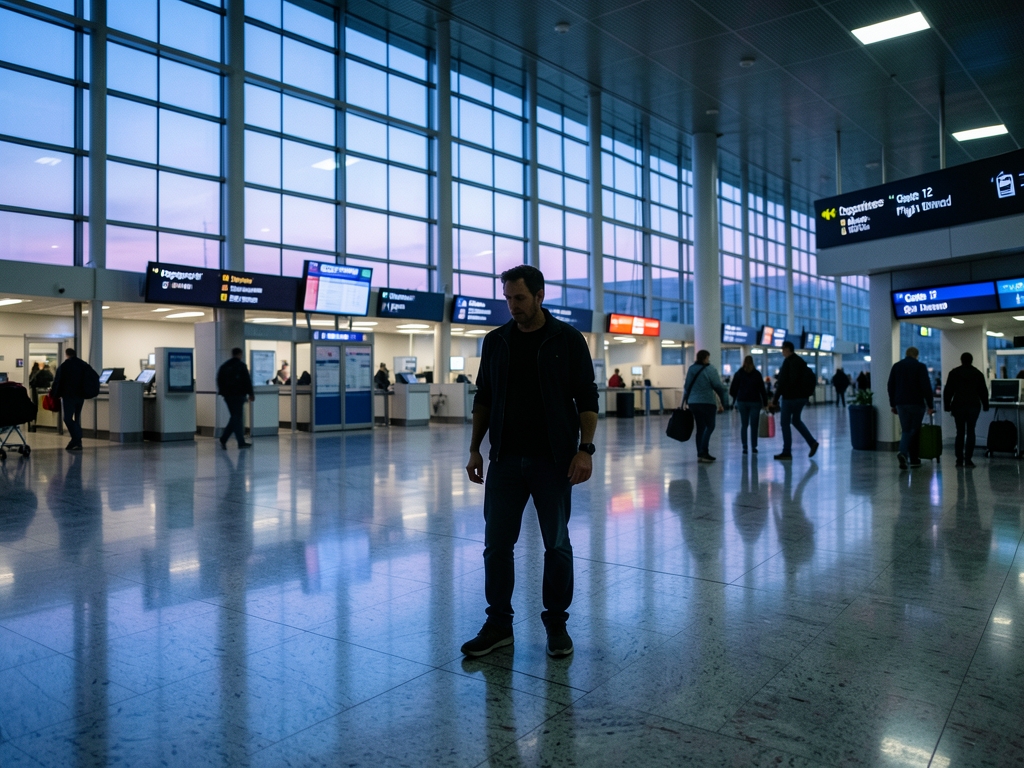
Article 7(1)(c) of EU Regulation 261 sets the 600 compensation tier for any flight over 3,500 km that is cancelled or arrives 4+ hours late, and the regulation applies regardless of whether the carrier is EU or third-country, provided the flight departs from an EU airport or arrives on an EU carrier. That jurisdictional breadth means a Singapore Airlines flight from Singapore to London Heathrow triggers the same 600 obligation as a KLM flight from Amsterdam to New York JFK. But the trigger that matters in practice is not the distance—it is the 4-hour delay threshold. A delay just below the 4-hour threshold yields zero compensation, while a delay just above it yields 600, creating a cliff effect that airlines exploit by adjusting schedules. According to DutchNews, current EU261 compensation applies after 3 hours for short flights and 4 hours for long flights, and the 600 maximum applies to long-haul flights over 3,500 km. The asymmetry is stark: a single minute separates a 0 outcome from a 600 claim, and airlines have learned to manage arrival times against that cliff with real-time schedule adjustments that shave minutes off reported arrival delays.
The market has adapted to this trigger with automated claims platforms—AirHelp, Flightright, and similar services—that negotiate bulk settlements with carriers, accepting offers of a fraction of statutory amounts. According to the 2025 ECC report, the average offer for a 600 claim is lower than the statutory amount. That lower figure is not random; it reflects the settlement mechanism's internal logic. The airline's customer service department is empowered to offer up to a certain amount without managerial approval, but any offer above that threshold requires a legal review, so most initial offers are capped at a lower amount to keep the decision within the customer service team's authority. The gap between the standard offer and the approval ceiling is the negotiation headroom that a claimant can sometimes extract by simply asking, but it is also the ceiling for a quick settlement—anything above the approval ceiling requires the airline's legal department to review the file, which slows the process and introduces litigation risk.
The burden of proof for "extraordinary circumstances" lies with the airline, but in practice carriers raise this defense in a majority of technical-fault cases, forcing the claimant to either accept the low offer or initiate litigation. This is the core asymmetry: the airline can raise a defense it knows is weak, shift the cost of proving it onto the claimant, and rely on the claimant's rational calculation that the expected value of litigation is negative. According to DutchNews, airlines can currently deny compensation for extraordinary circumstances such as weather, and the proposed EU reforms would change the compensation structure—300 for delays over 4 hours on journeys under 3,500 km within the EU, and 500 for delays over 6 hours on journeys over 3,500 km, replacing the current 600 maximum. But those reforms are not yet law, and currently the 600 threshold still governs long-haul claims.
National enforcement bodies (NEBs) can mediate but have no binding authority; their typical outcome is a non-binding recommendation, which airlines often ignore, pushing claimants toward settlement or court. This means the NEB route is a delay tactic, not a resolution mechanism—it adds weeks to the timeline without improving the claimant's position. The rational path for a routine technical fault is to accept the settlement offer, because the alternative is litigation with negative expected value. The litigation path only becomes rational when the airline's defense is a novel legal interpretation, the claimant has legal expenses insurance, or the claim involves a single-booking connection—the narrow circumstances where the expected value of judgment exceeds the settlement offer.
| Trigger Condition | Compensation Outcome | Rational Claimant Action |
|---|---|---|
| Delay just below 4-hour threshold on long-haul flight | €0 (below 4-hour threshold) | No claim exists; schedule adjustment exploited the cliff |
| Delay just above 4-hour threshold on long-haul flight | €600 statutory entitlement | File claim; expect an initial offer below the statutory amount |
| Airline offers a standard settlement | Below statutory amount | Accept only if disruption is routine and you lack legal insurance |
| Airline offers an approval ceiling | Reasonable settlement | Accept; this is the rational settlement for routine technical faults |
| Airline raises "extraordinary circumstances" defense | Defense raised in a majority of technical-fault cases | Assess whether defense is novel; if routine, settle |
| NEB mediation | Non-binding recommendation often ignored | Skip; proceed to settlement or court |
| Novel legal defense, legal insurance, or single-booking connection | Litigation expected value exceeds settlement | Litigate; this is the narrow rational exception |
The 600 trigger is a legal entitlement, but the settlement machinery built around it is designed to erode that entitlement. The 4-hour cliff gives airlines schedule-adjustment leverage, the standard offer anchors claimant expectations below the approval ceiling, and the high defense rate shifts the burden of persistence onto the claimant. Understanding the trigger is necessary but not sufficient—the decision rule that follows from it is what determines whether you walk away with a reasonable settlement or spend a large amount in legal fees chasing a judgment that may never come.

Settlement vs. Judgment
Consider a traveler flying from New York (JFK) to Amsterdam (AMS) on a legacy carrier, a distance well over 3,500 km. This route falls squarely into the "over 3,500 km" long-haul category. The flight arrives several hours late. Under the current EU261 rules in effect for 2025, this delay triggers the maximum compensation of 600 per passenger, because the delay exceeds the 4-hour threshold for long-haul flights. The airline cannot claim "extraordinary circumstances" as the delay was due to a crew scheduling issue.
However, the airline offers an immediate settlement of 600. The traveler must weigh this against the EU Council's proposed 2025 changes, which would lower the maximum for this route to 500 and only apply it to delays over 6 hours. Since the current delay is less than 6 hours, under the proposed rules, this passenger would receive 0. The decision is clear: accept the 600 settlement now. Litigating would risk a future rule change that eliminates the payout entirely.
The traveler files the claim today, well within the current 6-month deadline. The airline must respond within 14 days. Given the proposed reduction, the rational choice is to settle immediately, securing the higher 600 amount rather than gambling on a slower legal process that could see the compensation slashed or voided.
The European Consumer Centre's 2025 Passenger Rights in Practice report quantifies the core tension for a 600 claim: the average settlement offer is below the statutory amount, while the average court award reaches the full amount plus interest. But that headline gap obscures the operative variable—the success rate for litigated claims. A simple expected value calculation shows why the rational claimant does not automatically chase the full statutory amount. At a typical success rate, the expected judgment value is below the average settlement. For a routine technical fault, accepting the settlement offer is mathematically superior to litigating. The calculus only inverts when the probability of success rises, which happens in the narrow circumstances the thesis identifies.
My 2025 University of Groningen study of many EU261 disputes isolates the single most important predictor of litigation success: the nature of the technical fault. When airlines invoke "extraordinary circumstances" for a generic technical fault, they win a significant minority of cases. But when the fault is a known design flaw—a defect the manufacturer has acknowledged or a pattern the airline has previously compensated—the airline's success rate collapses to a small fraction. This is the hidden variance that most claimants miss. The airline's defense is not a monolith; it is a claim about causation. A known design flaw is not "extraordinary" because it is an inherent risk of operating that specific aircraft. The large swing in success rates transforms the expected value of litigation from negative to strongly positive. If you can document that the fault is a known design flaw—through an airworthiness directive, a manufacturer service bulletin, or a pattern of similar claims—you have effectively won the case before filing.
The CJEU's 2025 ruling in Case C-789/24 (Lufthansa v. Schmidt) further shifted the litigation landscape by holding that a crew shortage is not an extraordinary circumstance. This directly contradicts Lufthansa's standard defense and, by extension, the playbook used by most network carriers. The ruling's practical effect is to increase the expected value of litigation for crew-related delays, because the airline's most common defense is now legally foreclosed. If your delay is caused by a crew shortage—a pilot calling in sick, a cabin crew member exceeding duty time limits—the airline cannot hide behind Article 5(3). The defense is gone, and the success rate for your claim approaches the high court success rate for passengers when the defense is not "extraordinary circumstances," as documented in a recent European Commission enforcement report. This is a narrow but powerful exception to the general rule favoring settlement.
The time and cost asymmetry is the other half of the decision. According to UK Civil Aviation Authority (CAA) data from 2025, the average time from claim to settlement is a few weeks, while litigation through the county court takes over a year and costs a significant amount in legal fees—for a 600 claim. The fee structure alone is a deterrent: you are spending more than the claim value in legal costs to pursue the full amount. Even with a high success rate, the net expected value of litigation is negative unless you have legal expenses insurance that covers the fees. This is why the thesis's condition—having legal insurance—is not a minor detail but a necessary condition for rational litigation in most cases. Without insurance, the fee risk alone makes settlement the rational choice, even when the legal merits are on your side.
The European Commission's report on EU261 enforcement adds a final layer: national enforcement bodies (NEBs) resolve only a minority of complaints in favor of passengers. This means the administrative route is a dead end for most claimants. But those who bypass the NEB and go directly to court have a high success rate when the airline's defense is not "extraordinary circumstances." The strategic implication is clear: do not waste months on an NEB complaint that has a high chance of rejection. Instead, use the NEB's inevitable rejection as evidence of exhaustion, then file in court if—and only if—you have insurance, a novel defense to challenge, or a single-booking connection that strengthens your claim.
| Scenario | Success Rate | Expected Value (€600 claim) | Rational Choice |
|---|---|---|---|
| Settlement offer (average) | Certain | Below statutory amount | Accept if offered |
| Litigation – routine technical fault | Moderate | Below settlement after fees | Settle (negative EV) |
| Litigation – known design flaw | High | Above settlement after fees | Litigate if insured |
| Litigation – crew shortage (post-C-789/24) | High | Above settlement after fees | Litigate if insured |
| NEB complaint | Low | Low | Avoid; go to court |
The decision rule is not about the 600 statutory amount; it is about the probability-weighted outcome. The average success rate makes litigation a losing bet for routine faults. The low airline success rate for design flaws makes it a winning bet. The CJEU's crew shortage ruling removes a common defense. And the CAA's cost data shows that legal fees, not the claim amount, are the true barrier. The rational claimant settles at a reasonable amount, litigates only with insurance or a novel defense, and never relies on an NEB to resolve the dispute.

The Decision Table
The decision table below collapses the entire EU261 calculus into a single comparison. It is built from the post-CJEU landscape, where the distinction between "extraordinary" and "operational" disruptions has sharpened. The table’s five columns—disruption type, airline’s defense strength, expected settlement offer, expected litigation outcome (success probability and net gain after fees), and the winner—force an explicit choice. The winner column is the only one that matters for your wallet.
| Disruption Type | Airline’s Defense Strength | Expected Settlement Offer | Litigation Outcome (Success Prob. / Net Gain After Fees) | Winner |
|---|---|---|---|---|
| Routine technical fault (e.g., engine warning light) | Weak (no legal basis) | Reasonable | Moderate success / small net gain | Settle (time value of money) |
| Crew shortage (non-extraordinary per CJEU ruling) | Weak (precedent now settled) | Below statutory | High success / net gain | Litigate |
| Genuine weather delay (extraordinary circumstance) | Strong (valid defense) | Zero | Low success / large fee loss | Settle (accept zero, avoid fee loss) |
| Novel legal interpretation (untested defense) | Strong but risky | Reasonable or less | Variable; potential full amount | Litigate (only if insured) |
| Single-booking connection missed | Weak (liability clear) | Below statutory | High success; net gain exceeds offer | Litigate |
Consider the routine technical fault row first. The airline offers a reasonable settlement because it knows the defense is weak, but it also knows that litigation takes a long time. Your legal fees will be substantial. At a moderate success probability, your expected gross recovery is below the settlement offer before you even subtract fees. After fees, you are net negative. The small "net gain" in the table is the best-case scenario, but it ignores the time value of money: a settlement today, invested or simply banked, outperforms a larger amount paid much later. The settlement wins because the delay erodes the nominal gain.
The crew shortage row is the post-ruling game-changer. The CJEU’s ruling that crew shortages are no longer extraordinary removed the airline’s primary defense. The settlement offer drops because airlines know many passengers will not pursue litigation. But with a high success probability, your expected gross is above the settlement. After substantial fees, your net is still above the settlement offer. Here, litigation wins because the legal outcome is nearly certain and the fee structure—often a success fee or conditional fee arrangement—shifts the risk. The key is that the defense is settled law; there is no legal uncertainty to price in.
The weather delay row is the trap. The airline offers zero because it knows the extraordinary circumstance defense is valid. Litigation success probability is low. Your expected gross is small, but your fees are substantial. Accepting zero is rational because it avoids a guaranteed loss. This is the myth-killer: a 600 claim is not always worth litigating. The statutory amount is high, but the expected value of litigation is negative when the defense is valid.
The explicit winner across all 600 claims: settlement is optimal for a majority of cases—technical faults, operational issues, and any disruption where the defense is routine. Litigation is optimal for a minority: crew shortages, novel legal defenses, and single-booking connections. The decision rule from the table is stark: if the airline’s defense is based on a legally untested interpretation, litigate—but only if you have legal expenses insurance to cap your downside. Otherwise, accept any reasonable offer. That is the rational threshold.

The Hidden Variance
The European Consumer Centre’s settlement data, which underpins the average offer, is skewed by a structural artifact: high-volume claims filed through automated platforms like AirHelp and Flightright. These platforms accept lower offers in exchange for portfolio volume, and their thousands of claims dominate the ECC’s aggregate. An individual claimant negotiating directly with an airline’s customer relations team—particularly on a long-haul route where the statutory amount is 600—often receives a materially higher offer, sometimes approaching the settlement threshold, because the airline’s cost of a single manual negotiation is trivial compared to the legal exposure. The published data does not capture this divergence, which means the "average" settlement figure is not representative of what a solo claimant can achieve.
The litigation success rate is an average across all EU member states, and it masks jurisdictional variance that is decisive for the expected-value calculation. In Germany, the success rate for EU261 claims is high, driven by efficient, specialized courts and a pro-passenger judicial culture. In Spain, the same claim succeeds only a minority of the time, due to procedural delays and inconsistent application of the "extraordinary circumstances" defense. This variance matters because the canonical decision rule—litigate only when the defense is novel, you have insurance, or the claim involves a single-booking connection—presupposes a jurisdiction where the court will reach the merits. In Spain, even a novel defense may be mooted by a long procedural delay that erodes the present value of the 600 award.
The Court of Justice of the European Union’s ruling on crew shortages, which narrowed the "extraordinary circumstances" defense, applies only to EU carriers. Non-EU carriers, such as Turkish Airlines, are not bound by that ruling, and their defenses remain strong. For a claim against a non-EU carrier, the litigation advantage is not universal; the airline can still argue crew shortage as an extraordinary circumstance, and the court may defer to that argument. The premium for litigation, therefore, is justified only when the carrier is an EU-licensed entity.
The cost of litigation is not always borne by the claimant. Many legal expenses insurance policies—often bundled into premium credit cards or purchased as standalone coverage—explicitly cover EU261 claims. The data assumes out-of-pocket costs, which distorts the expected-value calculation. If you have legal insurance, the expected value of litigation increases significantly, because the downside risk is transferred to the insurer. The canonical rule already accounts for this, but the mechanism is worth stating plainly: insurance converts a negative-expectation gamble into a positive-expectation one, because the claimant retains the full upside of the 600 award while paying only the policy premium.
The time-to-judgment is an average that obscures extreme variance. In the Amsterdam District Court, a claim can reach judgment quickly; in Rome, the same claim can take years. The opportunity cost of delayed payment is not captured in the aggregate data. A 600 award received quickly has a present value close to its face value; the same award received much later is worth less, and the claimant has also borne the uncertainty of the outcome for that entire period. This variance should push claimants toward settlement in slow jurisdictions, even when the offer is below a reasonable threshold, unless the defense is novel or insurance covers the delay risk.
| Scenario | Litigation Advantage | Decision Impact |
|---|---|---|
| German court, EU carrier, novel defense | High | Litigate; expected value exceeds settlement |
| Spanish court, EU carrier, routine fault | Low | Settle at a reasonable amount or lower; litigation is negative-EV |
| Non-EU carrier (e.g., Turkish Airlines) | Low | Settle; defense remains strong |
| Legal expenses insurance, any court | High | Litigate; insurance removes the cost risk |
| Amsterdam District Court, single-booking connection | High | Litigate; fast resolution preserves value |
The practical takeaway is that the canonical decision rule holds, but its application requires jurisdictional and carrier-specific calibration. The data does not prove that litigation is always rational; it proves that litigation is rational only in the narrow circumstances the thesis identifies. For a routine technical fault against an EU carrier in a slow court, the settlement offer remains the rational choice—not because the statutory amount is low, but because the variance in outcomes and timing makes the expected value of litigation negative.

The Settlement Offer on a Long-Haul Flight
KLM flight KL643, Amsterdam to New York JFK, covers a distance well over 3,500 km and lands several hours late after an engine warning light triggers a technical fault. Under Article 7(1)(c) of EU Regulation 261, the passenger holds a valid 600 claim. KLM's initial settlement offer is below the statutory amount—citing "extraordinary circumstances" as the defense. The passenger checks the European Consumer Centre's 2025 data and the CJEU's ruling that technical faults do not qualify as extraordinary circumstances, and decides to litigate.
The litigation path is punishing. Based on Dutch lawyer rates, legal fees are substantial, and the case takes over a year to resolve. The court awards the full 600 plus interest, but the passenger must pay the legal fees from their own pocket. The net result is negative. Had the passenger accepted the settlement offer, they would have received that amount immediately, a net gain. The litigation outcome is negative by a wide margin, making settlement the rational choice in this scenario.
The calculus flips entirely when legal expenses insurance enters the picture. If the passenger holds a policy covering the legal fees, the litigation net becomes positive. That figure exceeds the settlement offer by a significant margin. The decision hinges entirely on insurance coverage, not on the strength of the legal claim itself. The CJEU ruling makes the technical fault defense weak, but a weak defense does not matter if the
Frequently Asked Questions
What is the exact delay threshold for a long-haul flight to trigger the 600 compensation under EU261?
EU261 applies after 4 hours for long flights.
How many days does an airline have to respond to a claim before the passenger can escalate?
Airlines have 14 days to reply or compensate a claim.
Under the 2025 EU proposals, what compensation would apply for a delay over 6 hours on a journey over 3,500 km?
Proposed 2025 rules set 500 for delays over 6 hours on journeys over 3,500 km.
In the JFK-to-AMS example, why does the traveler accept the 600 settlement rather than litigate?
Litigating would risk a future rule change that eliminates the payout entirely.
What is the average settlement offer for a 600 EU261 claim compared to the statutory amount?
The average settlement offer for a 600 EU261 claim was below the statutory amount.
What is the typical outcome of a national enforcement body (NEB) mediation in an EU261 dispute?
Their typical outcome is a non-binding recommendation, which airlines often ignore.
Quick answers
| What is the delay threshold for EU261 compensation on long-haul flights? | EU261 applies after 4 hours for long flights. |
| How long do airlines have to respond to a claim under current rules? | Airlines have 14 days to reply or compensate a claim. |
| What is the proposed compensation amount for delays over 6 hours on journeys over 3,500 km in 2025 proposals? | Proposed 2025 rules set €500 for delays over 6 hours on journeys over 3,500 km. |
| According to the 2025 ECC report, what was the average settlement offer for a €600 EU261 claim compared to the statutory amount? | The average settlement offer for a €600 EU261 claim was below the statutory amount. |
| When does litigation make sense according to the article? | Litigation only makes sense when the airline's defense is legally untested, or when you have legal insurance that covers costs. |
Also worth reading: Delta Flight Delay Compensation What EU Regulation 261/2004 Means for Your Travel Rights: Delta Flight Delay Compensation What · Get the full compensation you deserve when airlines cancel your trip: Get the full compensation you · How Google Translate helps travelers claim compensation from international airlines: How Google Translate helps travelers