
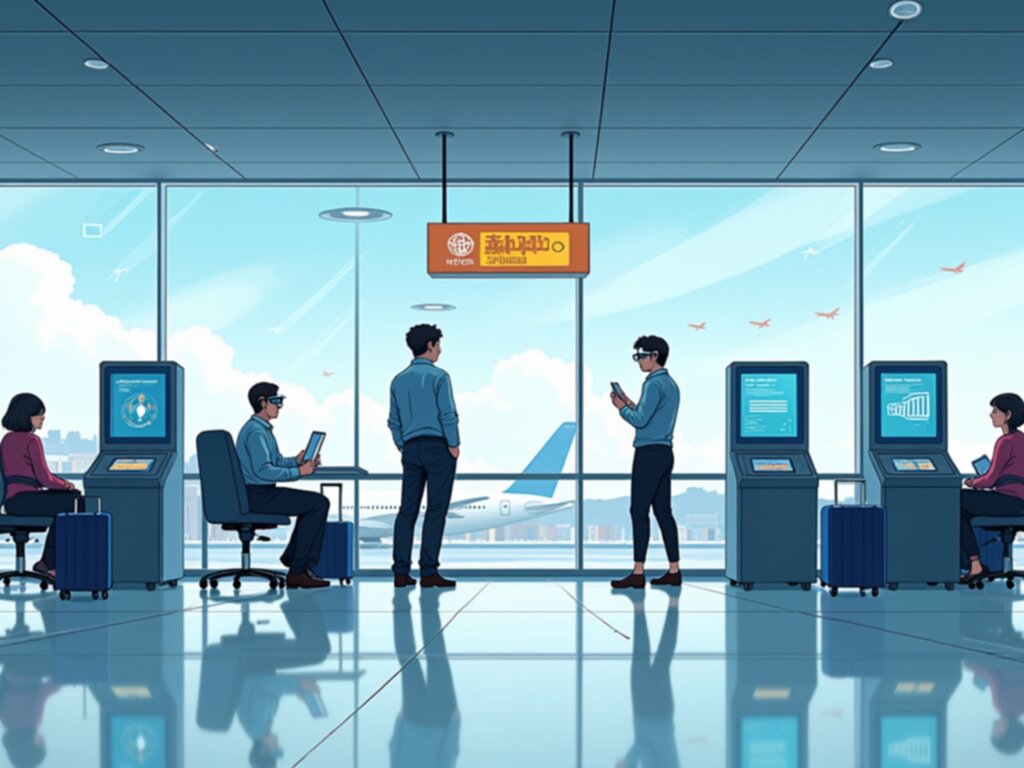
Seamless Arrivals: How Biometric and AI-Driven Smart Airports Simplify the Tourist Journey
You know that sinking feeling when you step off a long-haul flight and see a mile-long immigration queue? I’ve been watching how Dubai is basically deleting that stress with these biometric Smart Tunnels that use your face and iris as your passport. It’s wild because you’re cleared in under 10 seconds without even pulling a document out of your bag. But the real magic is happening behind the scenes where computer vision predicts terminal bottlenecks nearly 45 minutes before they actually happen. Wait times have dropped by 25% because staff move where they're needed before the crowd even arrives, which honestly feels like getting a part of your life back. Then there’s the luggage—new LiDAR sensors and 5G networks are now tracking bags with 9
From Self-Driving Taxis to Aerial Transit: The Rise of Autonomous Mobility in Dubai
I’ve been digging into how Dubai is basically turning science fiction into a daily commute, and honestly, seeing a car without a steering wheel pull up to the curb is still a total trip. We're talking about the Cruise Origin, a boxy, living-room-on-wheels that doesn't just drive itself—it was built from the ground up without even a place for a human to take over. To keep these things from getting stuck in the usual gridlock, the city runs a massive digital twin that crunches 100 terabytes of data every single day. It’s essentially a live simulation of the streets that predicts a jam before the first car even hits its brakes, which is wild when you think about it. But the real showstopper is when you look up and
Integrated Digital Connectivity: Enhancing Visitor Navigation Through Smart City Ecosystems
You know that frantic moment when you're lost inside a massive mall and the blue dot on your map just won't stop spinning? I’ve been looking into how Dubai is fixing that frustration by turning its very streets into a massive, thinking brain. They've rigged up about 10,000 smart streetlights that act like mini-computers, using 6G tech to make sure your phone responds in less than five milliseconds. But it’s the indoor stuff that really blows my mind, like using geomagnetic mapping to find your exact spot in the Dubai Mall within 30 centimeters. Think about it—you’re basically navigating by the earth's magnetic field while looking for a specific sneaker shop. If you’re heading to the Metro, those new AR kiosks project your actual train’s arrival right onto your view of the station with nearly perfect accuracy. Even the sidewalks are working hard now; at City Walk, the pavements actually harvest energy from your footsteps to power Wi-Fi 7 hotspots. It’s a bit wild to realize your morning walk is literally fueling the high-speed internet you’re using to post your vacation photos. I also found that your phone can now talk to autonomous shuttles, automatically rerouting them if your dinner reservation time changes. For travelers who are visually impaired, they’ve even added haptic feedback hubs that translate navigation cues into over 100 languages. My favorite part, though, is the network of 5,000 climate sensors that suggest walking paths about four degrees cooler than the main road. So, instead of sweating through your shirt, let's look at how these tiny data points are making the city feel a whole lot more human.
Sustainable Urban Transport: Paving the Way for Eco-Conscious Tourism in the Emirates
I’ve always felt a bit of conflict about the carbon footprint that comes with flying into a desert oasis, but the way the Emirates are tackling this right now is actually pretty brilliant. Just look at Dubai International, where they’ve started a 5% bio-synthetic kerosene mandate for every departing flight to cut down on that initial travel impact before you even touch the tarmac. Once you're on the ground, the transition to green energy feels almost invisible, but the engineering behind it is everywhere. I’ve been looking into their new fleet of hydrogen buses that literally only spit out water vapor, powered by a massive solar-fed electrolysis plant at the Al Maktoum park. Then there's the Blue Line on the Metro, which uses regenerative braking to catch kinetic energy and feed it back into the grid—it’s basically a giant battery on tracks. This clever bit of physics handles about 20% of the electricity needed for station cooling and lights, which is a huge deal given the local climate. Speaking of the heat, have you ever ducked into a bus shelter that felt like a walk-in fridge? More than 500 of them now use see-through solar cells in the glass to stay a crisp 22°C inside, even when the sidewalk outside is practically melting. Even the iconic wooden abras on the Creek have gone quiet, swapping noisy diesel engines for lithium-ion batteries that keep the water free from oily runoff. I’m also tracking how their deep learning traffic systems tweak lights in real-time to stop cars from idling, which has already shaved 15% off localized CO2. If you’re renting an EV, the new 400kW ultra-fast chargers can now give you a 200-kilometer range in about the time it takes to grab a quick espresso. It’s these specific, high-tech tweaks that are finally making it possible to enjoy the city without feeling like you’re leaving a massive footprint behind.