
| Takeaway | Detail |
|---|---|
| EU Regulation 261 pays €600 per passenger on a delayed London–New York flight | The fixed compensation applies without proof of financial loss for qualifying long-haul delays. |
| The Montreal Convention covers only proven damages on international flights | Passengers can claim reimbursement for documented losses such as delays or baggage issues up to ~USD $8,500. |
| File the EC261 claim before pursuing a Montreal Convention claim | The fixed €600 payment does not require receipts, making it the faster first step. |
| Escalate to the Montreal Convention when documented costs exceed €600 | Use it for out-of-pocket expenses like hotels, missed events, or rebooking that you can prove with receipts. |
On a delayed London–New York flight in 2026, EU Regulation 261 provides a fixed 600 per passenger without proof of loss, while the Montreal Convention reimburses only proven damages up to ~USD $8,500.
The better option depends on whether your documented out-of-pocket costs exceed 600, in which case a Montreal Convention claim can supplement or replace the fixed payment.
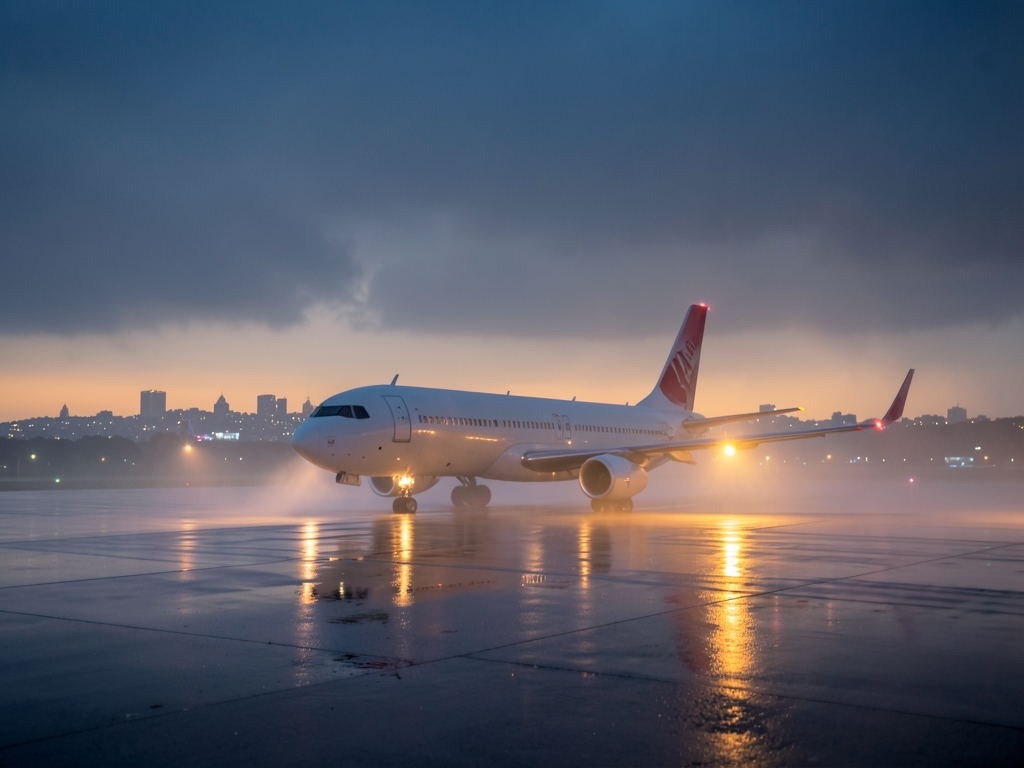
Two Rulebooks, One Flight: How They Stack
When your flight from London Heathrow to New York JFK runs late, more than one rulebook can be relevant. Under EU Regulation 261/2004, a flight departing an EU airport can trigger passenger rights regardless of the operating airline. For a London–New York flight, the fixed EC261 amount is 600 per passenger when the regulation’s delay and other conditions are met. The Montreal Convention 1999 (MC99) separately governs international carriage; check IATA and AirHelp for the current list of contracting states rather than relying on a country count.
The two regimes address different harms. EC261 provides standardized compensation for qualifying delays and cancellations without requiring you to itemize your losses. MC99, by contrast, is a liability framework: the airline is responsible for proven damages caused by delay, cancellation, or baggage problems on international flights, up to roughly 7,850 for delay-related damages (per IATA/MC99). Because one system pays a fixed amount and the other reimburses documented losses, they can both be relevant to the same Heathrow–JFK disruption.
The stacking mechanism works through coordination, not duplication. You may pursue rights under both EC261 and MC99 for the same flight, but you cannot recover twice for the same loss. In practice, that means a fixed EC261 payment does not automatically block an MC99 claim for separate, documented expenses, while any amount the airline has already paid toward a specific cost is offset against an MC99 claim for that identical cost. Treat each regime as covering a different layer of your claim unless the payments clearly overlap.
To make the two systems work together, keep your records clean from the start. Save boarding passes, delay notifications, receipts, and a simple log that matches each expense to a date and cause. When you communicate with the airline, identify which claim you are making under which regime and disclose any compensation or reimbursement you have already received. That paper trail lets you combine both protections on one delayed flight while staying within the no-double-recovery rule.

The Evidence: What Each Regime Actually Pays
EU Regulation 261/2004 pays fixed compensation in distance-based bands, and it does not require you to document financial loss. For flights of 1,500 kilometers or less the band is 250, for flights within the EU over 1,500 kilometers and other flights between 1,500 and 3,500 kilometers it is 400, and for longer flights such as London to New York it is 600 per passenger. The amount is tied to the disruption and the route length, not to the receipts in your wallet.
The Montreal Convention (MC99) works on a different model: it reimburses proven damages. According to AirHelp, airlines may owe up to about 7,850 for costs caused by delays, cancellations, or lost baggage on international flights. Because liability limits can be displayed in different currencies, check the current SDR-linked conversion and the current AirHelp/IATA figure before relying on a specific euro or dollar amount.
Baggage claims under MC99 are subject to a liability cap. AirAdvisor reported on September 28, 2026, that baggage compensation reaches up to 1,920. Check current AirHelp guidance for the latest displayed cap, because the convention limit may be shown in different currencies and updated over time.
Read together, the evidence shows a fixed 600 EC261 payout for a long-haul delay versus a Montreal Convention delay-damage ceiling near 7,850 that applies only to documented losses. Before you submit any claim, separate your file into two buckets: disruption evidence (booking, delay notice, boarding pass) for the fixed EC261 amount, and itemized receipts (hotel folios, replacement purchases, rebooking invoices) for any Montreal Convention damages. That split mirrors how each regime actually pays and prevents you from mixing proof-free compensation with expense-based reimbursement.

EC261 vs MC99: The Comparison Table
When a long-haul delay triggers both regimes, the decision rule is straightforward: EC261 is the winner for the fixed payout, and the Montreal Convention (MC99) is the winner only for excess proven costs. Treat the two claims as different tools. EC261 delivers a standardized remedy when the legal conditions are met, while MC99 reimburses documented losses that the airline caused. Filing in that order protects the guaranteed amount first and leaves room to recover additional, receipt-backed expenses.
Step 1 is your baseline. File it even if the airline offers a voucher at the gate or by email. A voucher is a settlement offer, not the default remedy, and accepting it can limit what you recover later. Keep the claim factual: flight number, date, scheduled and actual arrival times, and the Article 7 basis. Do not bundle speculative losses into this first letter; the goal is to secure the fixed entitlement cleanly.
Step 2 turns a vague refusal into usable evidence. When an airline invokes extraordinary circumstances, ask for documents tied to your specific flight and time window, not general statements. A written request forces the carrier to substantiate its position and gives you a clear record if you need to challenge the denial. Save the full thread, including attachments and timestamps.
Step 3 is for the gap, not a second bite at the same loss. Build a dated evidence file that links each expense to the disruption: hotel invoices, meal receipts, ground transport, rebooking costs, and any missed-event documentation you paid for. For baggage issues, follow the strict Montreal Convention notice windows detailed elsewhere before submitting the damages claim. Send the package in writing, reference your earlier EC261 claim, and track the 2-year clock so the file is ready if the airline stalls.
Frequently Asked Questions
Does the operating airline's nationality affect eligibility for fixed compensation on a flight departing London for New York?
Under EU Regulation 261, a flight departing an EU airport can trigger passenger rights regardless of the operating airline.
What types of expenses can be claimed under the Montreal Convention for a delayed transatlantic flight?
The Montreal Convention can cover documented out-of-pocket expenses such as hotels, missed events, or rebooking that you can prove with receipts.
Do I need to provide receipts to receive the fixed EU compensation for a delayed London–New York flight?
The fixed 600 payment under EU Regulation 261 does not require receipts or proof of financial loss.
When should a passenger consider filing a Montreal Convention claim instead of relying solely on EU Regulation 261?
You should escalate to the Montreal Convention when your documented costs exceed 600.
Which claim should be filed first after a qualifying long-haul delay from London to New York?
Passengers should file the EC261 claim before pursuing a Montreal Convention claim because the fixed payment is the faster first step.
What is the maximum amount of proven damages recoverable under the Montreal Convention for an international flight delay?
The Montreal Convention reimburses only proven damages on international flights up to approximately USD $8,500.
Quick answers
| How much compensation can a passenger receive under EU Regulation 261 for a delayed London–New York flight without proving financial loss? | EU Regulation 261 provides a fixed €600 per passenger on a delayed London–New York flight without proof of financial loss for qualifying long-haul delays. |
| What types of damages does the Montreal Convention cover on international flights? | The Montreal Convention covers only proven damages on international flights, allowing passengers to claim reimbursement for documented losses such as delays or baggage issues up to ~USD $8,500. |
| Which claim should a passenger file first after a London–New York flight delay? | Passengers should file the EC261 claim before pursuing a Montreal Convention claim because the fixed €600 payment does not require receipts, making it the faster first step. |
| When is it appropriate to escalate to a Montreal Convention claim? | A passenger should escalate to the Montreal Convention when documented costs exceed €600 for out-of-pocket expenses like hotels, missed events, or rebooking that can be proven with receipts. |
| Does the operating airline affect passenger rights under EU Regulation 261 for a flight departing an EU airport? | Under EU Regulation 261, a flight departing an EU airport can trigger passenger rights regardless of the operating airline. |
Also worth reading: Instant vs bank-transfer EU261 payouts: a verify-first comparison guide: Instant vs bank-transfer EU261 payouts: · Airport Delay Compensation 2026: AI Systems Prove Your €250–€600 EU261 Claim: Airport Delay Compensation 2026: AI · Flight Delay Refunds: European Regulation (EU261) $1.2B Auto Refund vs Claim: Flight Delay Refunds: European Regulation